A fake rimlight & directional light layer to support shape read, silhouette read and scene toning for lighting scenarios, selectively departing from standard PBR for stylized readability and silhouette clarity.
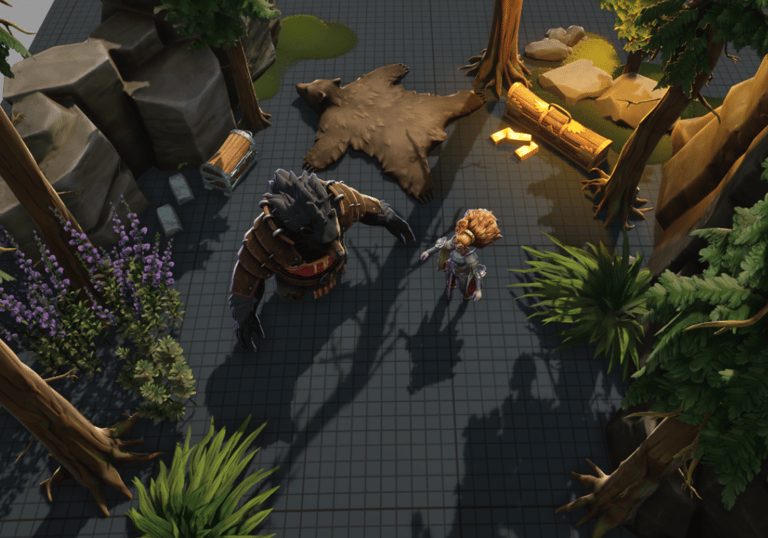
Stylized lighting in a top-down perspective
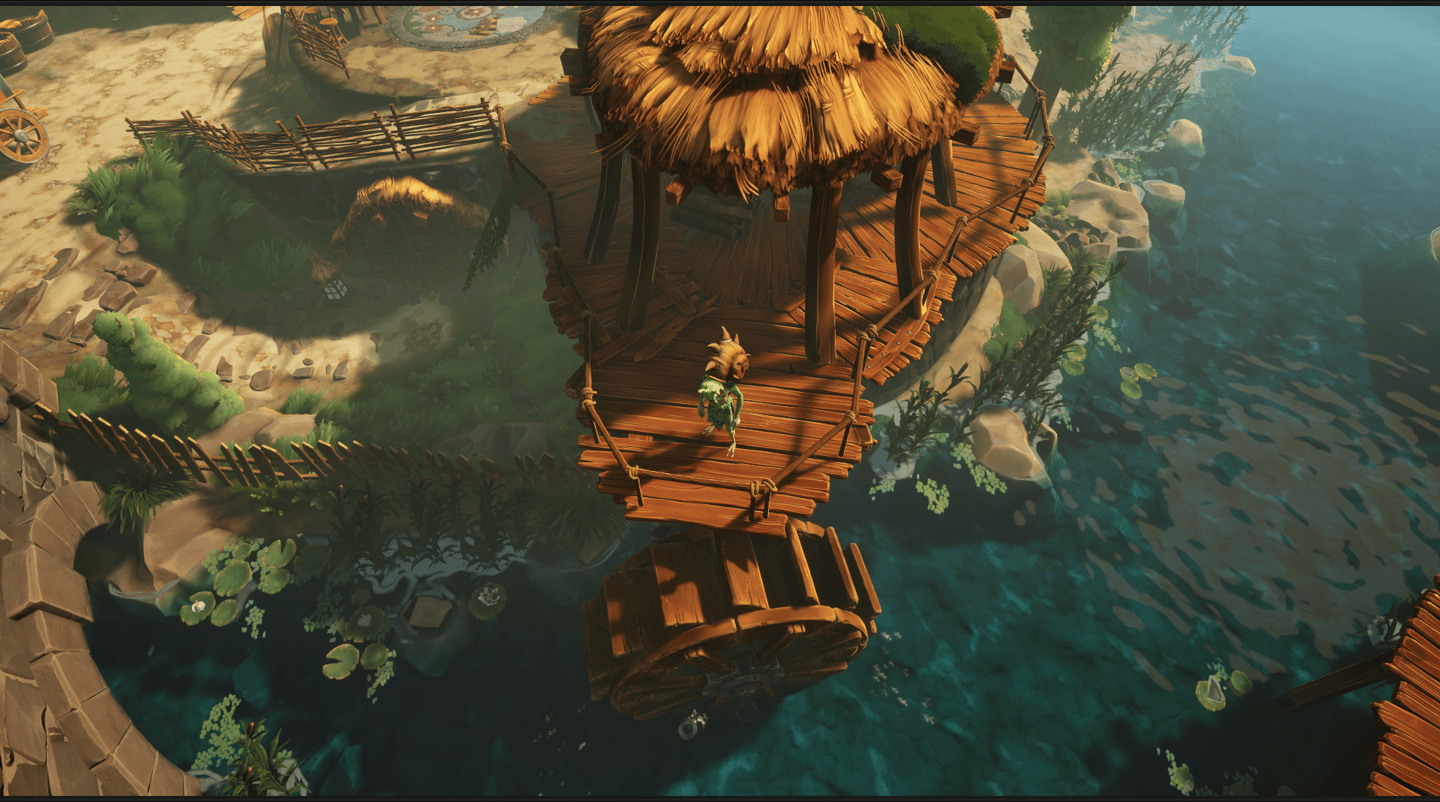

Shader-driven stylized light layer
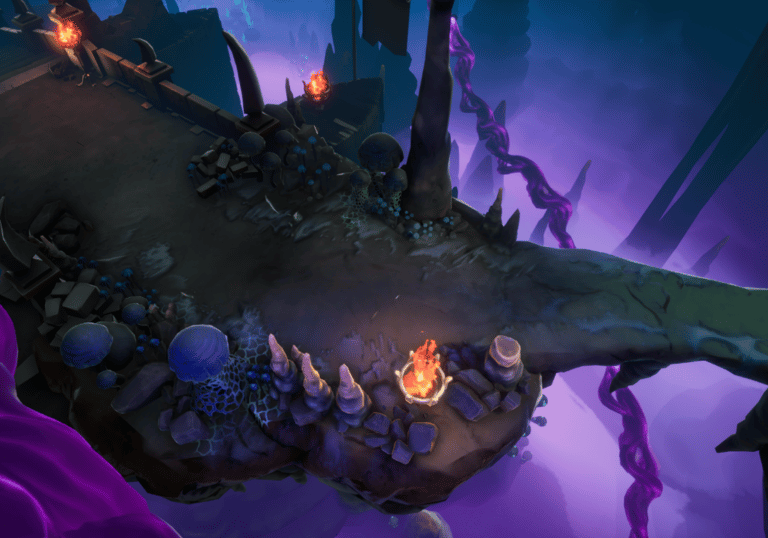
Fog & Depth post-process
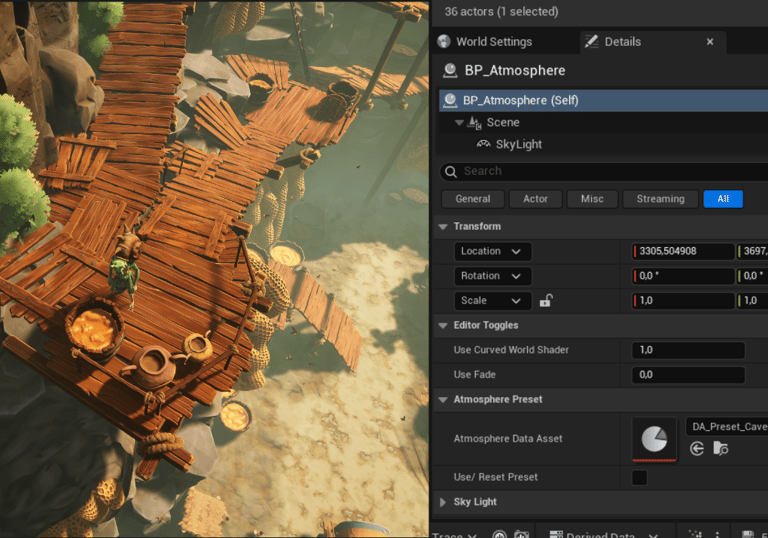
Global Control & Preset Blueprint
A post-process material that follows traditional, horizonal landscape composition principles to help push depth and foreground-midground-background clarity to lift up scene composition and atmosphere stylization in an art-directable way.
The central control point for managing and storing lighting scenarios, containing all global lighting and atmospheric elements for our scenes. With localized trigger volumes for runtime atmospheric shifts.
A top-down perspective brings a few main issues on the table when talking about lighting: A lack of depth and lighting that looks flat.
How do you fake depth without leaning on fog, and how can you push silhouette read when you can't push directional light directly?
The lighting pipeline I built to counter these issues has the following systems at it's core:
Stylized light layer & Dynamic Rimlights

Dynamic rimlights lean on isolating specular on directional lights (UE 5.5). Example below on how one node can create a dynamic rim.
Refined for production with dual-layer system and project-wide specular budgeting
Result: Dynamic, soft rimlight with zero additional lights, works across all materials, environment's core readability feature.
The directional light had to stay top-down for shadow readability, but this created flat shapes. A fake directional specular mask fakes a steeper backlight angle: objects appear ilt from further behind while the actual light remains overhead.
Localized atmospheric shift triggers

A mood shift trigger system that lerps scene light, fog & character post-process and environment shader light layers between presets on entering trigger area.
No post-process volume blends. Only MPC lerps.
For outdoor>dungeon shifts and localized, gentle mood shifts for storytelling support.
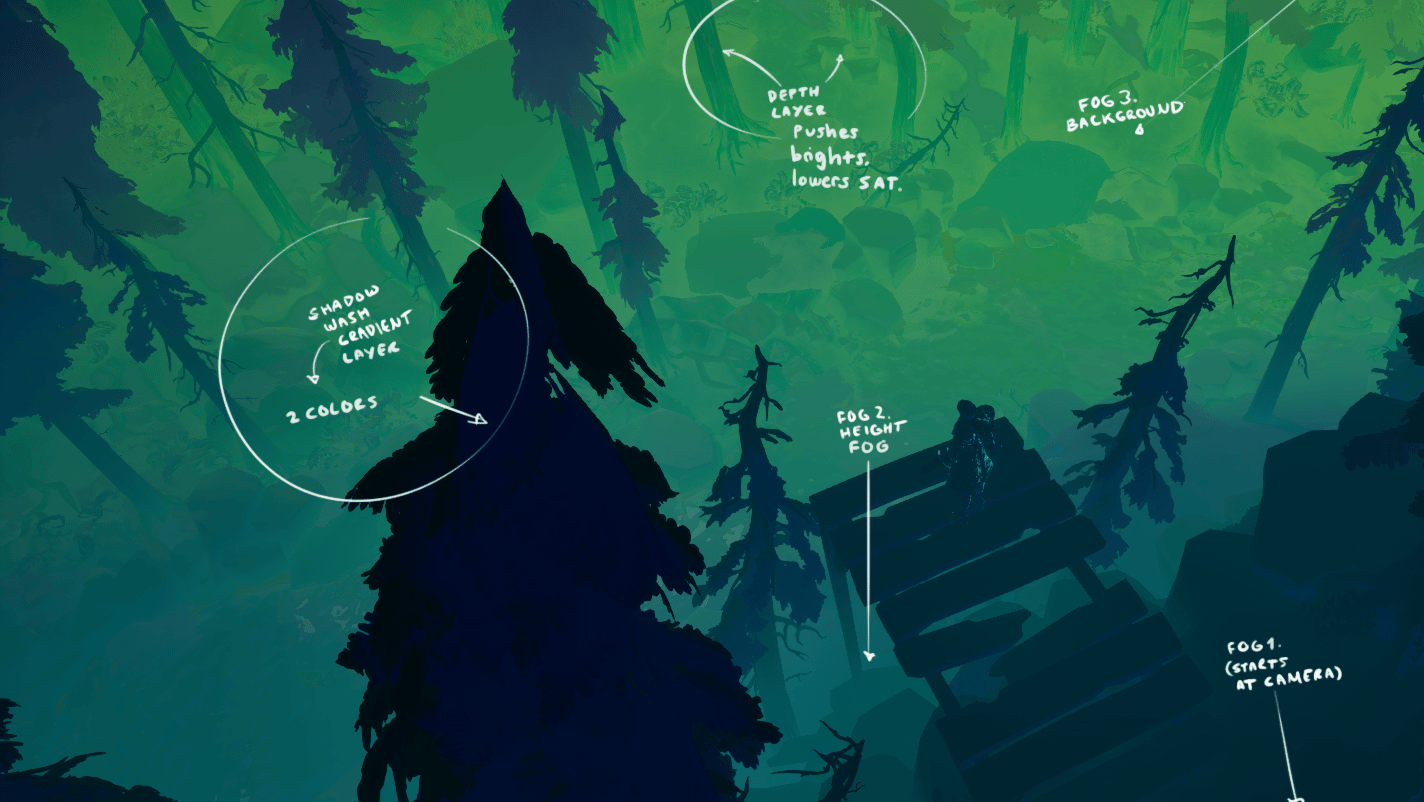
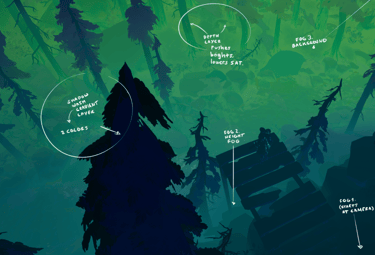
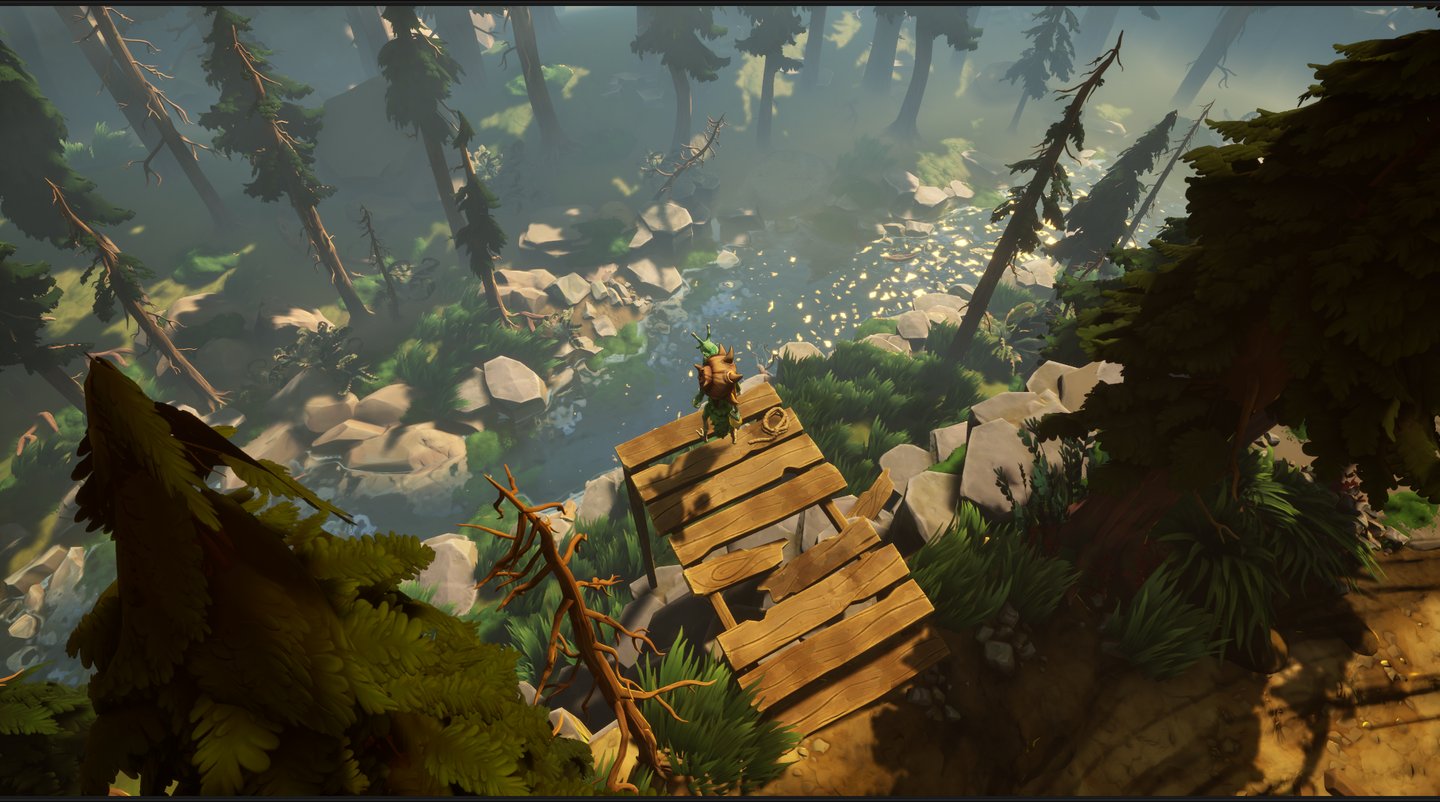
Shadow gradient layer:
A subtle color overlay gradient to a) tone shadows closer to camera and b) wash out shadows with another color further away from camera
Depth layer:
Masks out the lightest, direct-lit areas and pushes them to a brighter value while also desaturating color
Depth & Fog Post-Process
Three fog layers:
A height fog, background fog & global fog with separate controls for each, replacing the exponential fog actors in scenes
Below is an in-engine screenshot of the post-process during prototyping phase.
Flat, monotone color values is a powerful tool for clarity when designing with composition-enhancing systems.
Forest view with gentle fogs and strong lifting of brighter areas on surfaces towards the back to push distance.
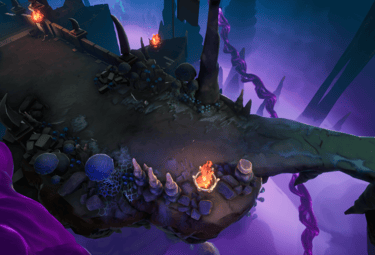
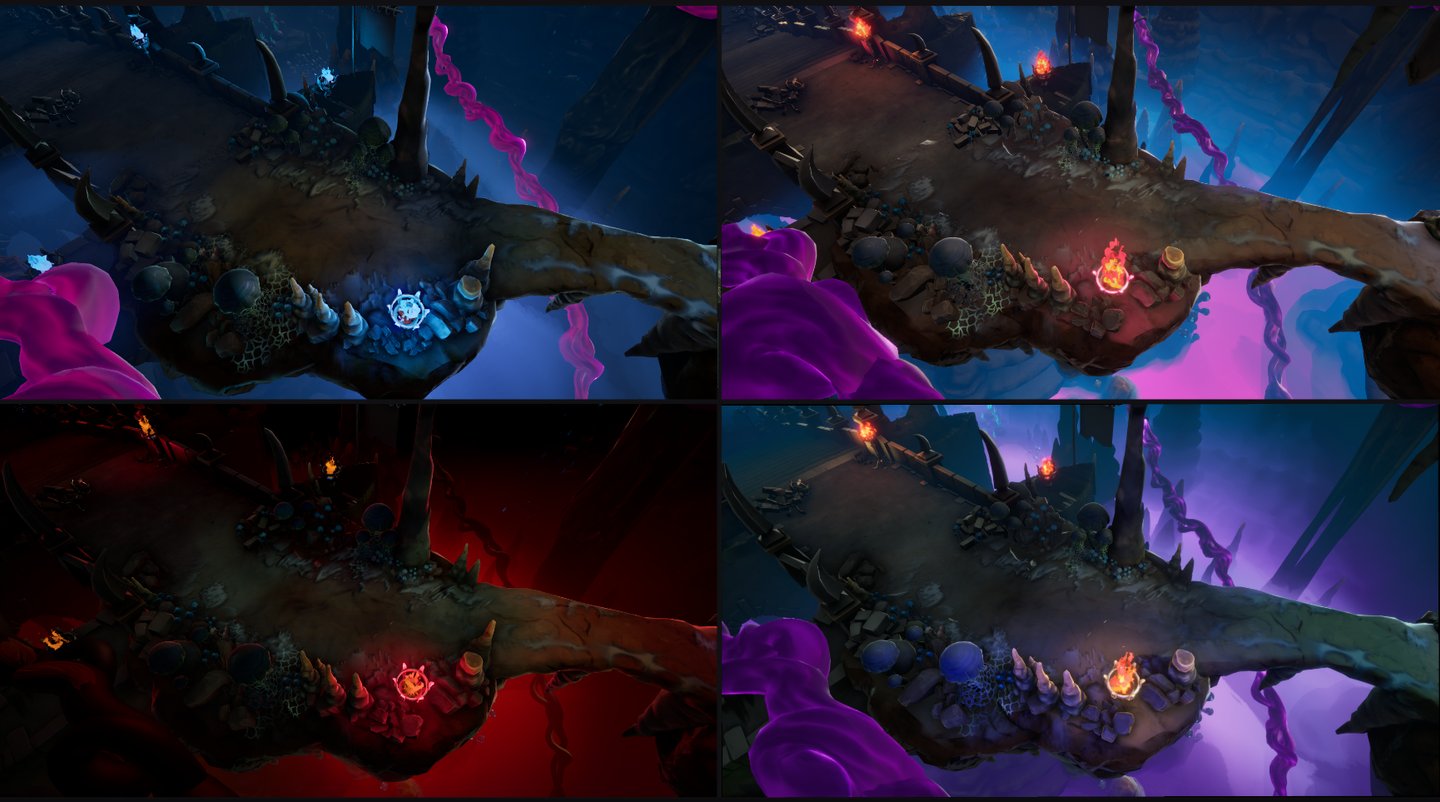
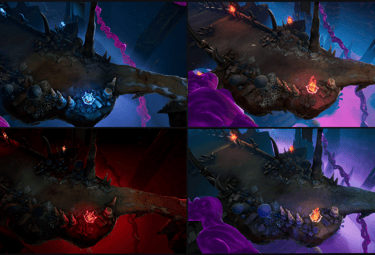
Fantasy cave mood exploration. First three are based on concept artist's mood exploration. Last one (bottom right) is my own exploration.
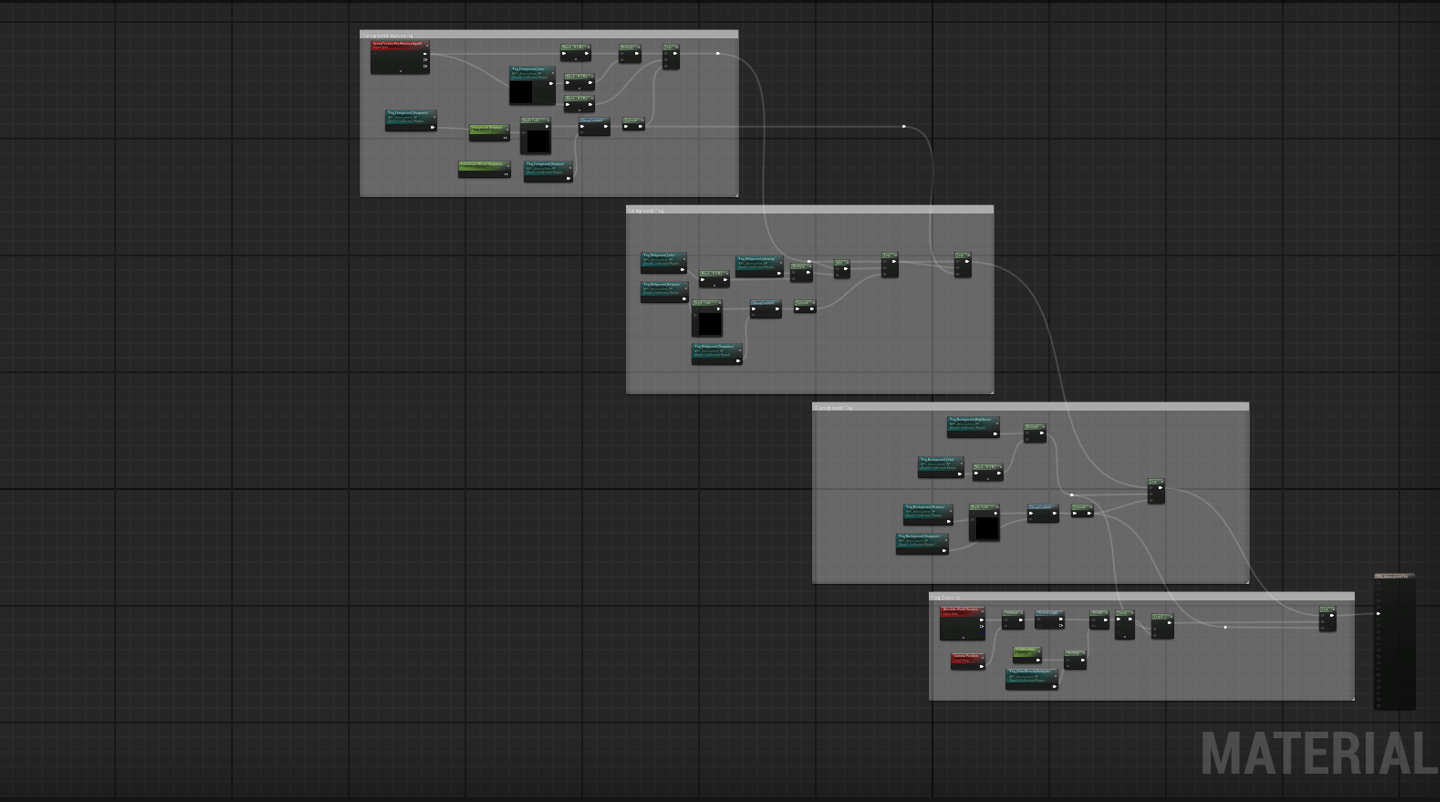
The graph: Rather simple. I prefer to find the simplest MVP of any system and scale only when needed. Often I find simple to be enough.